
Why Do I Owe Taxes If I Didn’t Take Any Money Out of the Business?
Many business owners are surprised to receive a tax bill despite never taking money out of their business. The reason often comes down to how pass-through entities are taxed—and understanding the difference between business profits, cash flow, and owner distributions.
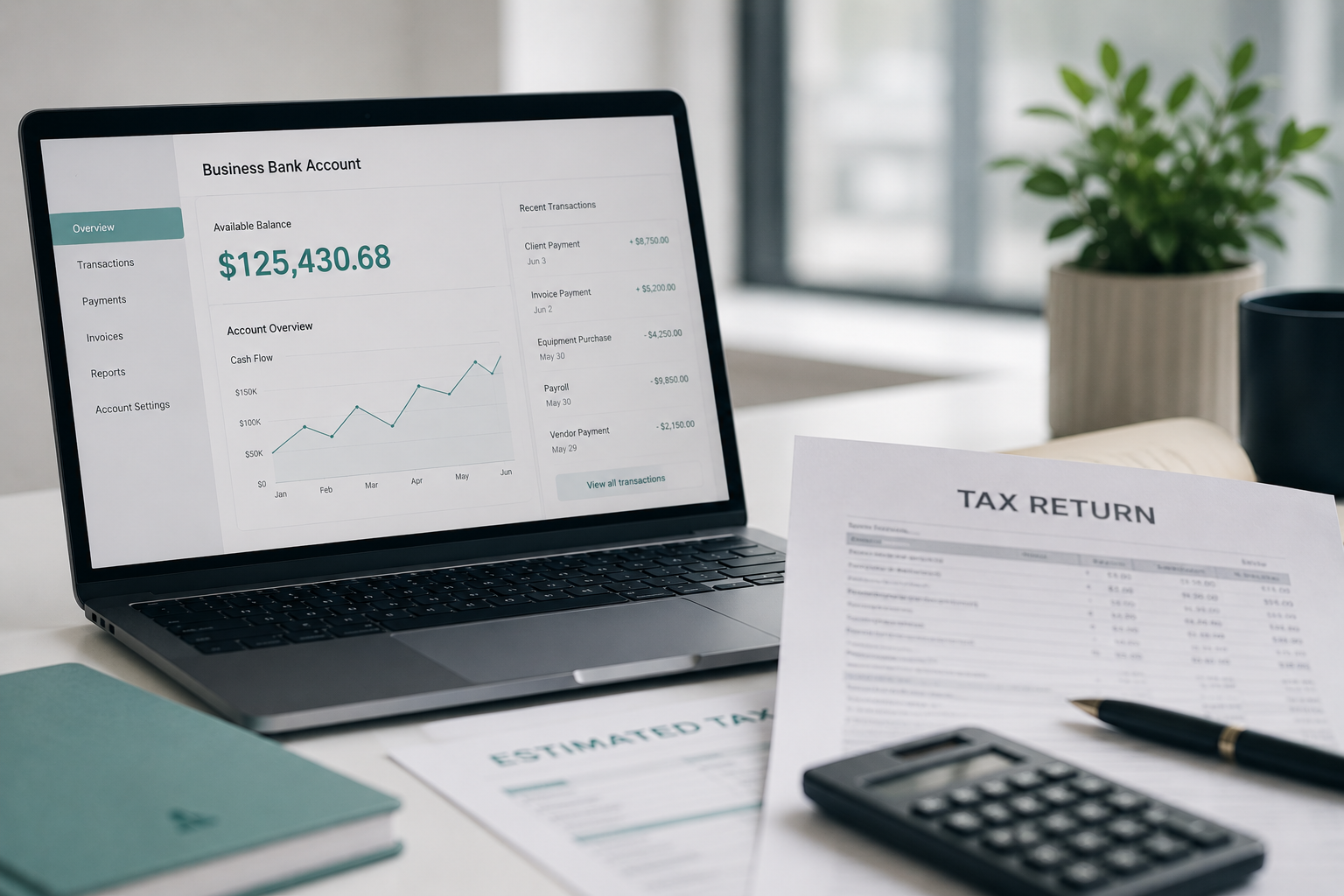
One of the most common questions business owners ask at tax time is: "How do I owe taxes when I never took any money out of the business?"
It's a fair question. After all, if the money stayed in the business bank account, shouldn't it stay there tax-free too?
Not necessarily.
The answer depends on how your business is taxed.
First, What Type of Business Do You Have?
If your business is an:
S Corporation
Partnership
Multi-member LLC taxed as a partnership
LLC taxed as an S Corporation
then your business is generally considered a pass-through entity.
A pass-through entity does not typically pay federal income tax at the business level. Instead, the profit "passes through" to the owners and is reported on their personal tax returns. That means you can owe taxes on business profits even if you never transferred the money to your personal bank account.
If your business is a C Corporation, the rules are different. A C Corporation generally pays its own income tax at the corporate level, so owners are not usually taxed simply because the company earned a profit.
For the rest of this article, we'll focus on pass-through entities, since that's where most of the confusion occurs.
Taxes Are Based on Profit, Not Withdrawals
One of the biggest misconceptions among business owners is that taxes are based on how much money they take out of the business. In reality, taxes are generally based on profit, not distributions or owner draws.
Profit is calculated as:
Revenue – Expenses = Profit
Let's look at a simple example.
Example
Suppose your business generated:
$300,000 in revenue
$220,000 in expenses
That leaves:
$80,000 in profit
If your business is an S Corporation or Partnership, that $80,000 may flow through to the owners' personal tax returns, even if every dollar remains in the business bank account. The IRS generally taxes the profit, not whether the cash was distributed.
What Is a K-1?
Many owners first discover this concept when they receive a Schedule K-1. A K-1 reports your share of the business's taxable income. For example, if an S Corporation earns $100,000 and you own 50% of the company, your K-1 may show $50,000 of taxable income.
You could owe tax on that $50,000 even if the business kept all of the cash to fund operations, hire employees, or build reserves.
This often surprises owners who assume they are only taxed on money they actually receive.
Common Reasons You Owe Tax Without Taking Money Out
1. The Business Is Retaining Cash
Many businesses intentionally leave profits in the company to:
Build emergency reserves
Purchase equipment
Hire employees
Expand operations
Prepare for slower seasons
The cash stays in the business, but the profit is still taxable to the owners.
2. The Business Used Cash to Pay Down Debt
This is one of the most common reasons business owners feel confused.
Imagine your business earns a profit and uses the excess cash to make payments on a business loan. While interest is generally deductible, principal payments are not.
As a result:
Cash decreases
Loan balances decrease
Taxable profit often remains unchanged
From the owner's perspective, the money is gone. From the IRS's perspective, the business still earned taxable income.
3. The Business Purchased Equipment or Other Assets
Businesses often spend cash on:
Vehicles
Equipment
Computers
Furniture
Building improvements
Some purchases may qualify for immediate deductions, but others must be depreciated over multiple years. That means cash may leave the business today while the tax deduction is spread out over time.
4. The Business Has Accounts Receivable
Businesses using accrual accounting may recognize income before customers actually pay. In that situation, your financial statements may show profit even though the cash hasn't been collected yet.
This can create a tax bill before the money is sitting in your bank account.
Why Business Owners Get Confused
The confusion usually comes from thinking that business taxation works like a personal checking account.
Many owners assume:
"If I didn't transfer the money to myself, I shouldn't owe tax on it."
That would make sense if taxes were based on withdrawals. But pass-through businesses generally don't work that way. The IRS taxes the profit earned by the business, not the amount withdrawn by the owner.
That's why an owner can owe taxes even while leaving every dollar inside the company.
Profit and Cash Flow Are Not the Same Thing
This situation is a perfect example of why profit and cash flow are different.
A business can be:
Profitable but short on cash
Cash-rich but unprofitable
Profit measures what the business earned.
Cash flow measures where the money actually went.
If you've ever wondered why your accountant says the business made money while your bank account feels empty, understanding this distinction is critical.
How to Avoid Tax Surprises
The best way to avoid an unexpected tax bill is to monitor profitability throughout the year rather than waiting until tax season.
Some helpful strategies include:
Reviewing financial statements monthly
Monitoring year-to-date profit
Setting aside money for taxes as profits grow
Making estimated tax payments when appropriate
Meeting with a tax professional before year-end
By the time tax season arrives, most tax-saving opportunities have already passed. Planning ahead typically provides far more flexibility than reacting after the year has ended.
The Bottom Line
If you owe taxes despite not taking money out of the business, it doesn't necessarily mean something is wrong. For S Corporations, Partnerships, and many LLCs, taxes are generally based on business profit—not owner distributions. The business may have retained the cash, paid down debt, purchased assets, or simply kept money in the bank for future growth.
Understanding how profit flows through to your personal tax return can help you avoid surprises and make smarter decisions throughout the year.
If you're unsure whether your business structure could create this type of tax situation, reviewing your financial statements and projected tax liability before year-end can help you plan ahead and stay in control.
Wondering What Your Tax Bill Might Be?
Many business owners don't realize they're building a tax liability until tax season arrives. By then, most opportunities to reduce taxes for the year have already passed.
Tax planning can help you estimate what you'll owe, identify potential tax-saving strategies, and make informed decisions before year-end.
